The 5-Year Cost of Owning an iPhone: A Comprehensive Financial Analysis
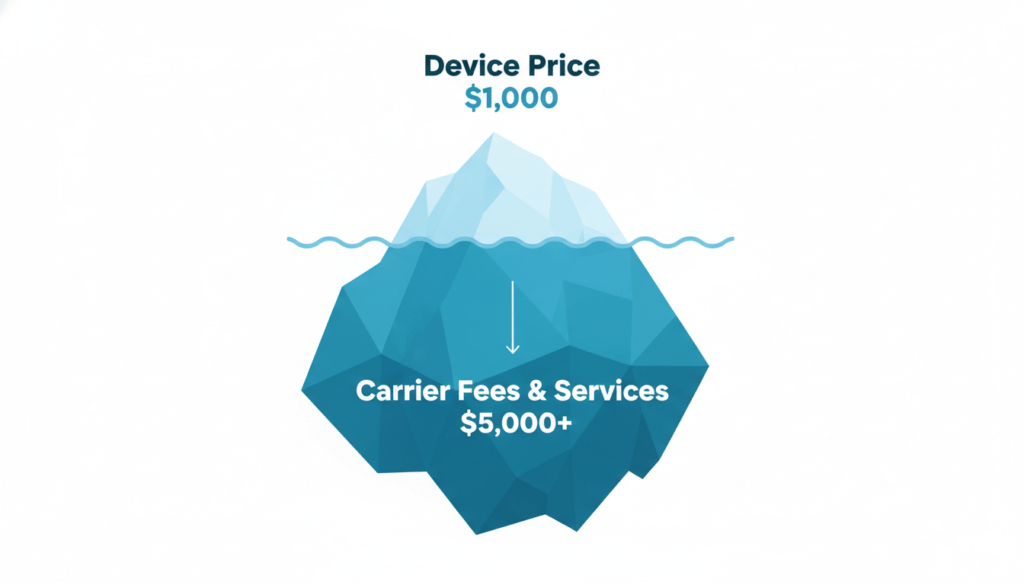
When most consumers consider upgrading their smartphone, the focus almost exclusively lands on the retail sticker price. Whether it is a standard model or the latest Pro Max, the upfront cost—ranging from $800 to $1,600—often feels like the most significant financial hurdle. However, a detailed financial analysis reveals that the initial hardware purchase represents only a fraction of the total expenditure over the device’s lifespan.
The 5-year cost of owning an iPhone is a metric that savvy tech users must evaluate to understand the true impact on their personal finances. When you factor in cellular data plans, subscription services, insurance, and accessories over a 60-month period, the total cost of ownership (TCO) shifts dramatically. By understanding these long-term expenses, you can make informed decisions that optimize your budget without sacrificing the premium experience you value.
Executive Summary: The Real Numbers
To provide immediate clarity, the following table breaks down the estimated costs over a five-year period for a typical user with a flagship iPhone model. This analysis assumes a standard upgrade cycle, a major carrier plan, and a modest suite of Apple services.
| Expense Category | Monthly Average | 5-Year Total | Share of Total Cost |
|---|---|---|---|
| Hardware (iPhone Pro) | ~$20.00 (amortized) | $1,200 | ~16% |
| Carrier Plan (Unlimited) | $85.00 | $5,100 | ~69% |
| Services (Apple One/Cloud) | $15.00 | $900 | ~12% |
| Accessories & Maintenance | ~$3.50 | $210 | ~3% |
| TOTAL ESTIMATED COST | ~$123.50 | $7,410 | 100% |
The Hardware Investment: Depreciation and Value
The most visible cost is the device itself. For a flagship model, you are looking at an entry point of roughly $1,000 to $1,200. While this is a significant upfront sum, the iPhone holds a unique position in the market regarding value retention.
Resale Value and Trade-Ins
Unlike many competitors, iPhones retain their value exceptionally well. Data suggests that an iPhone may retain 40-50% of its value after two years. This high residual value effectively lowers your 5-year cost if you choose to trade in your device midway through the cycle. When purchasing directly from Apple or authorized retailers, utilizing trade-in programs can subsidize the cost of the next device, smoothing out the hardware expense curve.
Financing vs. Outright Purchase
Many users opt for 0% APR financing over 24 or 36 months. While this makes the monthly cash flow manageable, it often ties the user to a specific carrier, which leads us to the most substantial expense in the equation.
Strategic Advice: To maximize hardware value, keep your device in pristine condition with a quality case and screen protector. The difference in trade-in value between a “Good” and “Flawless” condition device can be over $100.
The Carrier Component: The Hidden Majority of Cost
As the summary table indicates, the carrier plan is the dominant financial factor, often accounting for nearly 70% of the total 5-year cost of owning an iPhone. A standard unlimited post-paid plan from a major network provider typically averages between $70 and $90 per month per line, before taxes and fees.
Analyzing the Premium for Subsidies
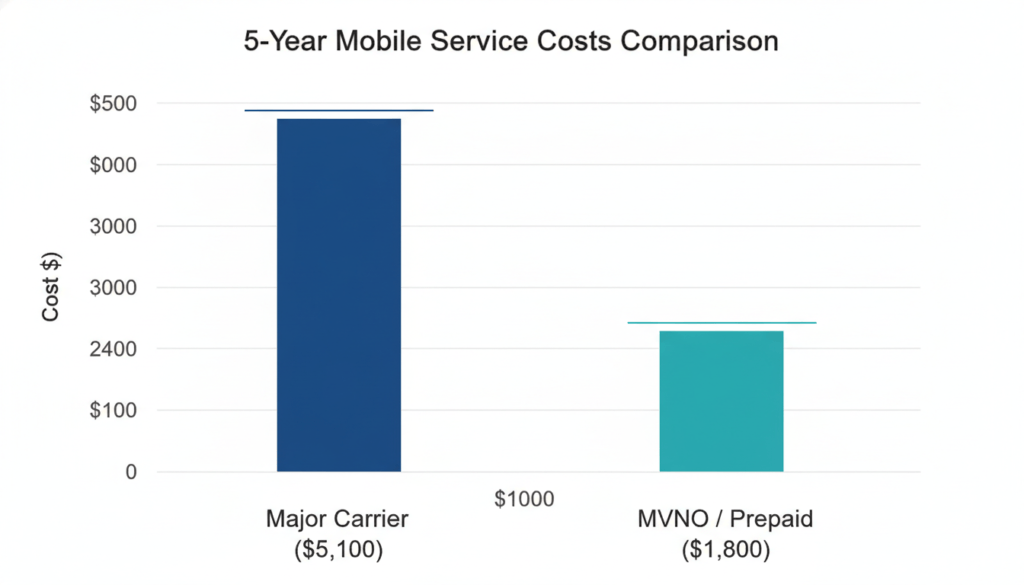
Carriers often offer “free” or deeply discounted iPhones in exchange for a 36-month contract. While attractive, these contracts lock you into premium-tier plans. Over five years (60 months), a $85/month plan totals $5,100. In contrast, a Mobile Virtual Network Operator (MVNO) might offer similar coverage for $30/month, totaling $1,800 over the same period.
Even if you pay full price for the phone ($1,000) and use the $30/month plan, your total is $2,800—significantly less than the subsidized route.
Strategic Advice: Audit your data usage. If you consistently use less than 10GB of data or are frequently on Wi-Fi, switching to a prepaid or MVNO carrier can save you upwards of $3,000 over five years.
The Ecosystem Services: Recurring Digital Costs
The modern iPhone experience is rarely limited to hardware and cellular connectivity. The ecosystem of services is designed to enhance functionality but introduces a layer of recurring costs that are easy to overlook.
Cloud Storage and Media
With high-resolution photos and 4K video recording, the base 5GB of free iCloud storage is rarely sufficient. Most users eventually upgrade to a paid tier (50GB, 200GB, or 2TB). Additionally, services like Apple Music, Apple TV+, or Apple Arcade are often bundled into Apple One subscriptions, ranging from roughly $19 to $37 monthly.
Insurance and Protection
AppleCare+ provides peace of mind, covering accidental damage and battery service. Over five years (assuming two consecutive 2-year plans plus monthly extensions), this premium protection can add $400 to $600 to your total ownership cost.
Strategic Advice: Review your subscriptions annually. Family Sharing plans can significantly reduce the per-person cost of services like iCloud and Apple Music compared to individual subscriptions.
Accessories and Maintenance
Finally, the physical maintenance of the device contributes to the TCO. This category includes:
- Protective Gear: Quality cases and screen protectors (approx. $50–$100 over 5 years).
- Charging Infrastructure: Fast chargers, MagSafe accessories, and extra cables (approx. $80).
- Battery Replacement: If you keep a single phone for 5 years, you will likely need at least one out-of-warranty battery replacement, costing roughly $90.
While these individual purchases seem minor, they cumulatively represent a distinct line item in your technology budget.
Conclusion: Empowering Your Tech Budget
The 5-year cost of owning an iPhone is a complex figure composed of hardware, connectivity, and digital services. While the device itself commands a premium price, it is the monthly carrier fees and recurring subscriptions that dictate the true financial impact. By shifting your focus from the upfront retail price to the Total Cost of Ownership, you gain the leverage to make smarter financial choices—whether that means opting for an MVNO, bundling services, or simply extending your upgrade cycle.
Ultimately, maximizing the value of your investment isn’t just about spending less; it is about ensuring every dollar contributes to a better experience. To extend the life of your device and protect your investment, consider exploring software optimizations. For example, you can learn how your phone has a hidden gaming mode that boosts performance, which can help maintain speed and responsiveness as your device ages.