
Table of Contents
We need to talk about the Tesla Model Z. It is 2035 in this scenario. The automotive landscape has shifted entirely. We aren’t looking at cars that just drive; we are looking at mobile living spaces. The Model Z isn’t officially on the production line yet, but the concept designs and the leaked specs from industry insiders paint a picture that is hard to ignore. This isn’t just an upgrade to the Model S or a bigger Cybertruck. This is a complete rethink of what a vehicle does.
Let’s get straight to the point. The Model Z represents the end of the “driver” era. It is built around Level 5 autonomy. That means no steering wheel. No pedals. Just a cabin. If you are a driving enthusiast, this might annoy you. But for the mass market, this is the endgame. The focus here is on efficiency, artificial intelligence integration, and battery technology that makes range anxiety look like a joke from the 2020s.
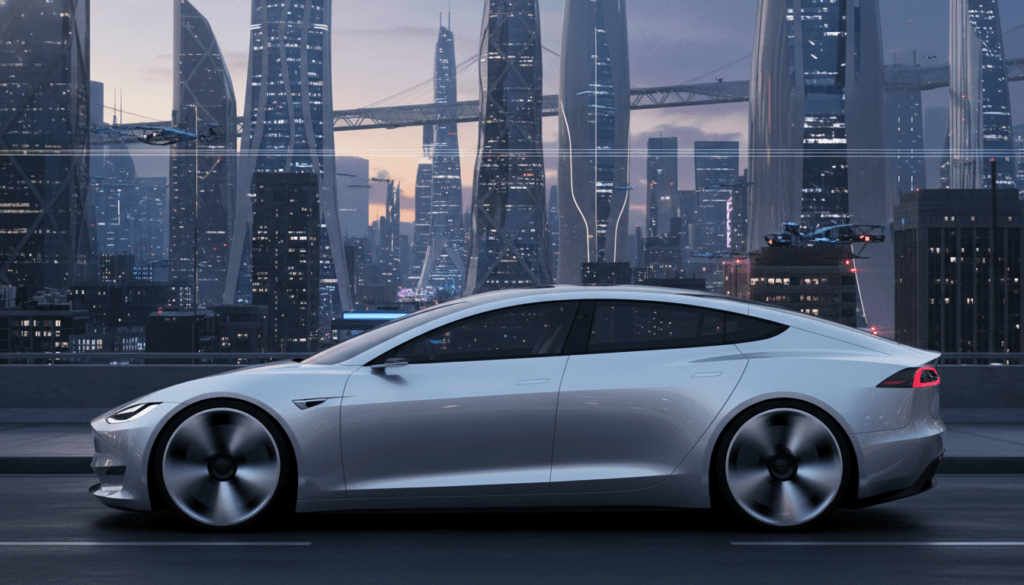
The Design Philosophy: Aerodynamics Over Everything
You look at the Model Z and the first thing you notice is the lack of drag. Tesla has always been obsessed with drag coefficients. The Model S was slippery. The Model Z is basically a bar of soap. The wheels are fully skirted. The mirrors are gone, replaced entirely by cameras embedded flush with the bodywork. It looks strange at first. Unnatural even. But physics dictates the design here.
The body is likely a single-piece casting. We saw the start of this with the Giga Press years ago. By 2035, the chassis is printed in massive sections to reduce weight and parts. Fewer parts mean fewer things to break. It also lowers manufacturing costs significantly. The exterior is likely using a smart-glass composite. It changes opacity based on sunlight intensity or passenger privacy settings. You don’t tint these windows; you just tell the car to go dark.
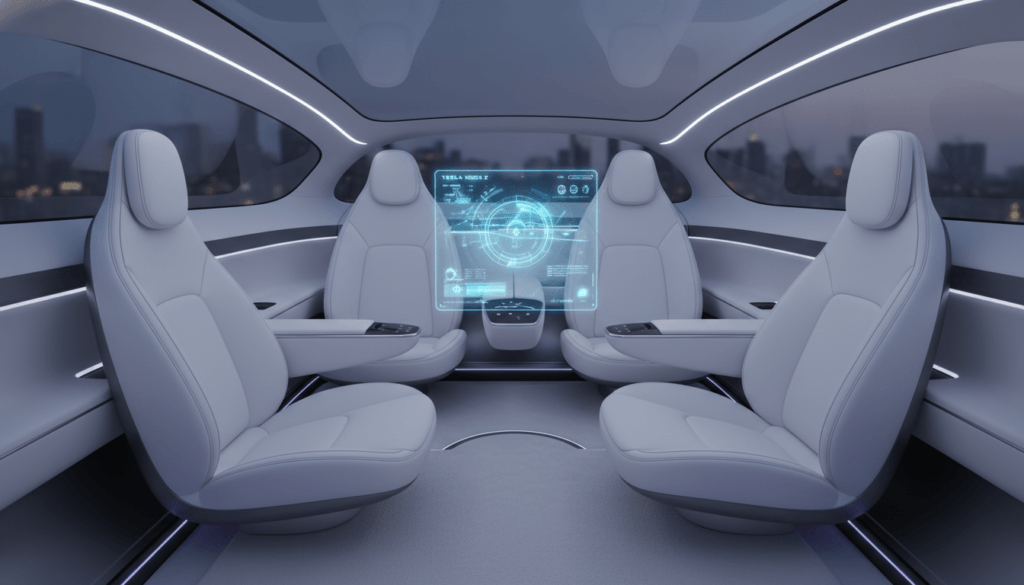
Inside, the layout is the biggest departure. Since there is no driver’s seat, the front seats swivel 180 degrees. It creates a lounge atmosphere. You can have a meeting, sleep, or watch a movie on the panoramic screens that replace the traditional dashboard. The space is utilized for comfort, not control.
Solid-State Batteries and the 1,000-Mile Range
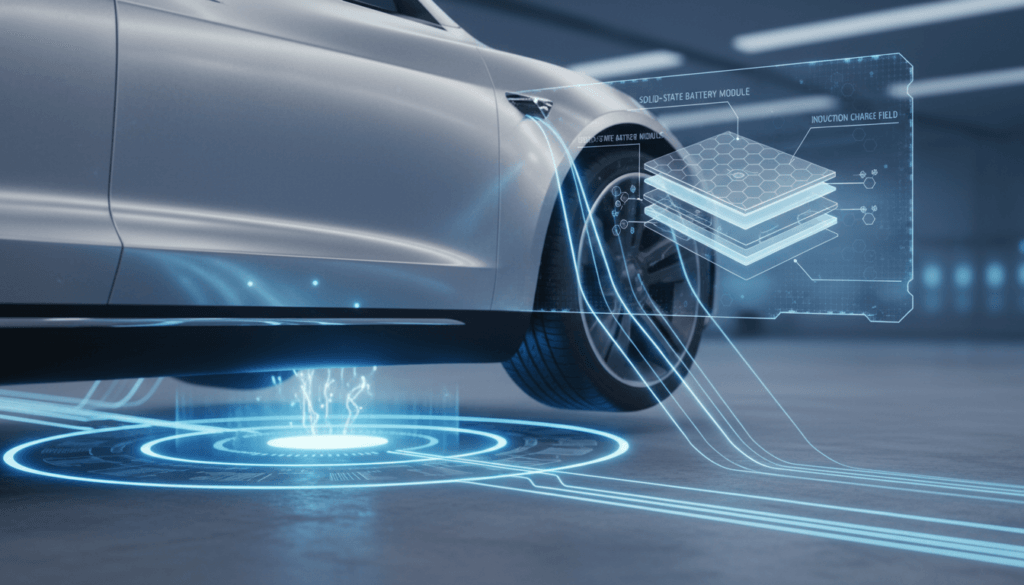
Lithium-ion is old news in this concept. The Model Z is designed around solid-state battery architecture. This is the holy grail we have been waiting for. Why does this matter? Density. You can pack more energy into a smaller space without the risk of thermal runaway—fires.
The projected range for a vehicle like the Model Z is hitting the 1,000-mile mark on a single charge. That is Los Angeles to Portland without stopping. Realistically, people will stop, but the car doesn’t have to. This changes the infrastructure game. You don’t need a Supercharger at every grocery store anymore. You charge it once a week, maybe less depending on your commute.
Charging speeds are the other half of this equation. With 800V or even 1200V architecture, the Model Z could pull a 0-80% charge in under 10 minutes. It becomes as fast as pumping gas. The bottleneck isn’t the car anymore; it is the grid capability. If the grid can’t supply the juice fast enough, the car’s tech is wasted. That is a practical hurdle we still have to figure out.
AI Integration: The Car That Thinks
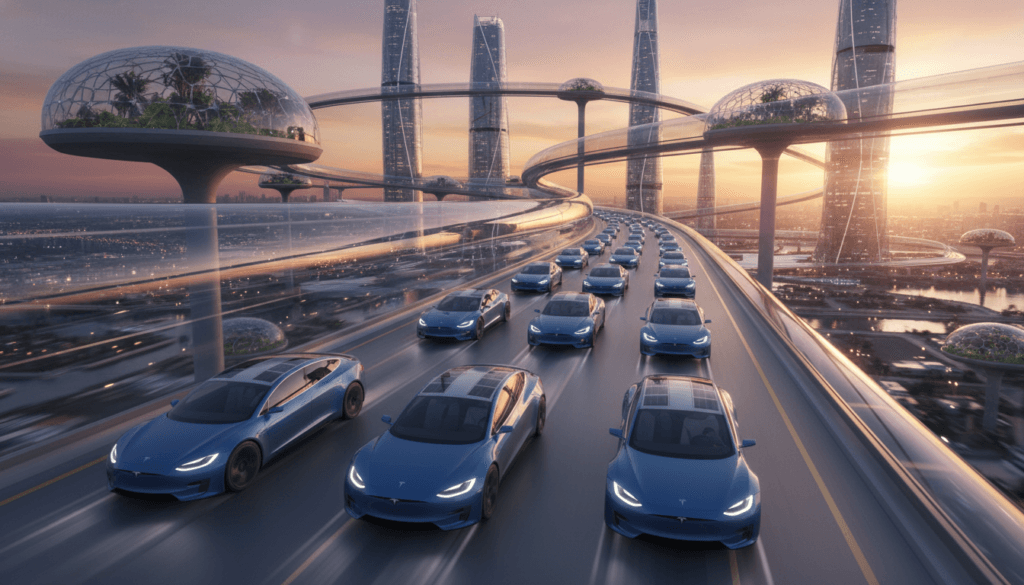
The “Z” in Model Z might as well stand for Zero-latency. The onboard computer is integrated with a descendant of the Grok AI system. It isn’t just processing road lines. It is communicating with the city. This is V2X (Vehicle-to-Everything) communication. The car talks to traffic lights, other cars, and even pedestrian smartphones to predict movement.
This reduces accidents to near zero. It’s simple math. If every car knows where every other car is going, collisions become statistical anomalies. The AI also manages the interior experience. It knows if you are stressed and adjusts the lighting and music. It knows your schedule. It pre-cools the cabin before you even think about leaving the house.
There is a data privacy concern here. If the car knows everything, who owns that data? Tesla? The government? Advertisers? It is a valid question. If you don’t manage your privacy settings correctly, your car is basically a spy. But for many, the convenience outweighs the risk.
The Robotaxi Economy
You cannot discuss the Model Z without bringing up the Robotaxi network. This car is designed to make money while you sleep. When you aren’t using it, the Model Z goes out and works. It picks up passengers, drops them off, and charges itself. The interior materials are chosen for high durability and easy cleaning for this exact reason.
This shifts the cost of ownership. A car is usually a depreciating asset. It loses value the second you drive it off the lot. The Model Z concept flips that. It becomes an income generator. However, this depends entirely on regulatory approval. If the laws don’t catch up to the tech, you just have a very expensive car sitting in your driveway.
Common mistakes people make when analyzing this: they assume the price will be astronomical. It might start high, but the goal is cost-per-mile reduction. If the car generates income, the sticker price becomes less relevant to the financing model.
Performance Specs: Speed vs. Comfort
Tesla made its name on 0-60 times. The Model S Plaid broke records. The Model Z will be fast, likely hitting 0-60 in under 1.9 seconds thanks to the instant torque of next-gen electric motors. But speed isn’t the primary selling point here. Comfort is.
The suspension is active electromagnetic. It scans the road ahead and adjusts the damping before you hit a bump. You shouldn’t feel the road. The ride quality is intended to be like a maglev train. Smooth. Silent. The motors are wrapped in acoustic dampening materials. At 70 mph, the cabin should be quiet enough to hear a pin drop.
Projected Specifications
- Range: 1,000+ miles (Solid State)
- Charging: Wireless Induction & 500kW Wired
- 0-60 mph: < 1.9 seconds
- Autonomy: SAE Level 5
- Price: Estimated $45,000 – $60,000 (Subsidized by Robotaxi earnings)
Why This Matters Now
Why are we talking about a 2035 concept today? Because the technology is already being tested. The FSD (Full Self-Driving) beta versions are the ancestors of the Model Z’s brain. The 4680 battery cells are the precursors to solid-state packs. The industry is moving this direction whether we are ready or not.
If manufacturers don’t pivot to software-defined vehicles, they die. It is that simple. The Model Z represents the survival of the fittest in the auto industry. It forces competitors to stop building cars and start building mobility solutions. If you are looking to invest or just understanding where the market is going, watch the tech stack, not just the sheet metal.
The Model Z is a vision. It might not arrive exactly like the renders show. Maybe it will have a different name. But the features—autonomy, AI, and extreme efficiency—are inevitable. The future is coming fast.